Buffalo City TVET College: Courses, Online Application, Requirements, Fees
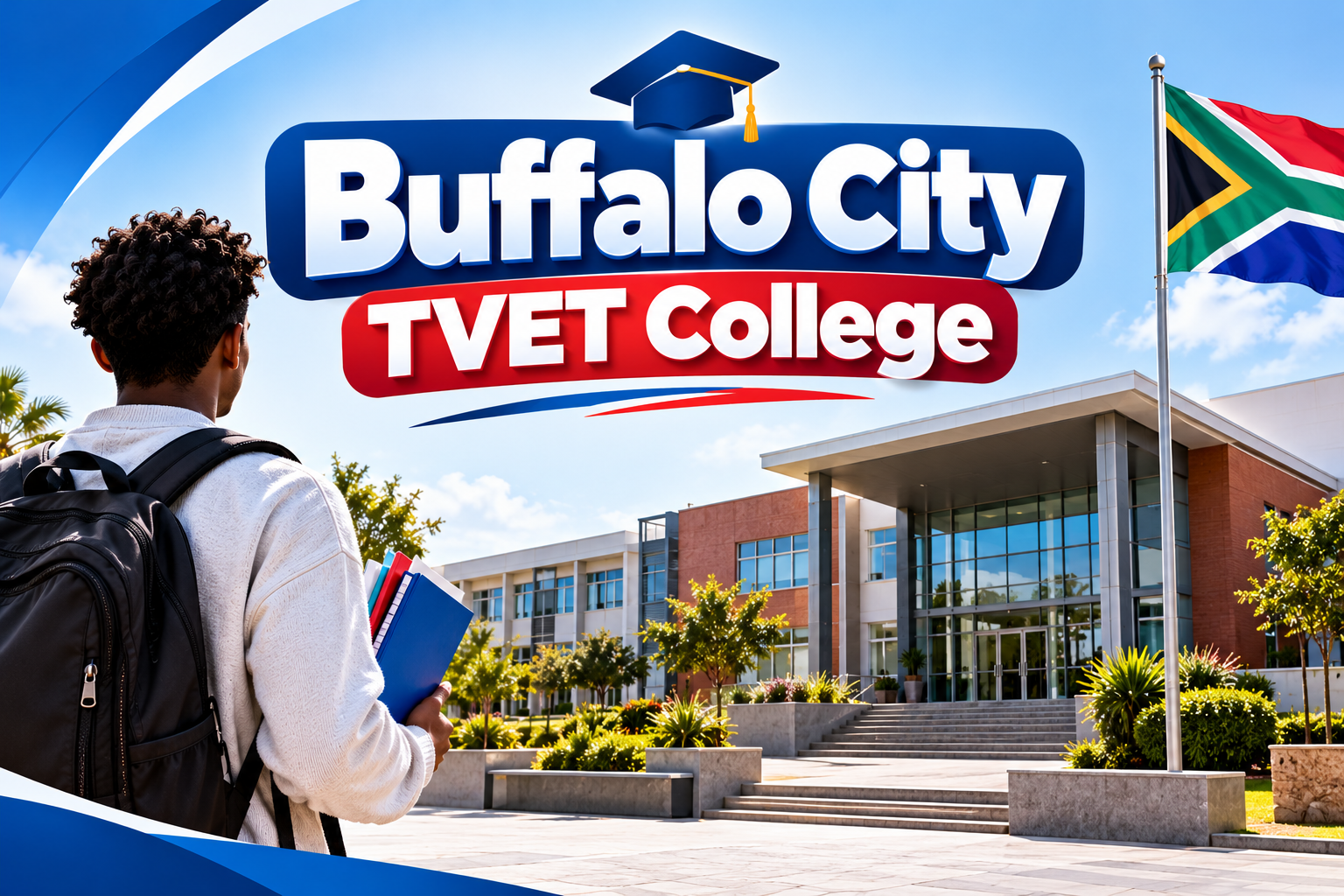
Buffalo City TVET College. Choosing the right college is an important step toward building a successful career. Students need an education that gives them useful knowledge, practical skills, and a better chance of finding work. In South Africa, Buffalo City TVET College is one institution that offers technical and vocational education for students who want to prepare for different career paths.
Buffalo City TVET College, also known as BCC, is based in East London in the Eastern Cape, South Africa. The college focuses on vocational education and training that helps students develop skills for the workplace. Its programmes cover areas such as business, finance, information technology, engineering, building construction, and occupational training.
Buffalo City TVET College offers different learning options for students who have completed school and want to continue their education. It also provides occupational programmes, learnerships, apprenticeships, and skills training through its relevant departments.
What Is Buffalo City TVET College?
Buffalo City TVET College is a public technical and vocational education and training institution in South Africa. Its main goal is to provide education that helps students develop knowledge and practical abilities for employment and further learning.

Unlike programmes that focus mainly on classroom theory, many TVET courses include practical activities. These may involve working with equipment, completing projects, learning computer skills, or practising tasks related to a chosen occupation.
The college has several campuses and training locations, including East London, John Knox Bokwe, St Marks, and King Street. Each campus has its own focus, so students should confirm where their selected programme is offered before applying.
Why Choose Buffalo City TVET College?
There are several reasons why students may consider Buffalo City TVET College when planning their education.
1. Practical and Career-Focused Education

Practical training is an important part of vocational education. Students can develop skills that relate to the work they may do after completing their studies.
For example, an engineering student may learn technical concepts and take part in practical activities. A business student may develop skills in office work, accounting, communication, and administration.
These skills can help students prepare for employment and understand the needs of different workplaces.


2. Different Courses and Career Paths
The college offers programmes in several study areas. Students can explore business, engineering, information technology, occupational training, and other vocational fields.
This gives learners the opportunity to choose a programme based on their interests, school results, and future plans.
3. Opportunities for Practical Skills Training
Some programmes focus on specific trades and occupations. These may include automotive repair, fitting, motor mechanics, furniture making, and other technical skills.
Such training can be useful for students who enjoy working with tools, machines, equipment, and practical projects.
4. Support for Student Development
Students may need help with their studies, course choices, and career plans. Academic guidance and information from college staff can help learners understand their options.
Students should contact the relevant campus to ask what academic support and career guidance services are available for their programme.
5. Possible Financial Support
Eligible students may be able to apply for funding through the National Student Financial Aid Scheme (NSFAS), depending on the programme and the current funding rules.
Students should check the official NSFAS website and the college’s latest notices to confirm eligibility, covered costs, and application dates.
Buffalo City TVET College Courses and Programmes
One of the most important things to check before applying is the list of available courses. Buffalo City TVET College offers programmes across business studies, engineering, and occupational training.
The programmes available for a particular intake may change, so students should confirm current offerings with the college.
1. Business Studies Courses
Business studies can be a good choice for students who want to work in offices, companies, financial departments, customer service, or other business settings.
The college lists the following areas under its School of Business:
- Education and Development
- Finance, Economics and Accounting
- Information Technology and Computer Practice
- Mechatronics
- Office Administration
- Tourism
Each programme has its own subjects and entry requirements.
Finance, Economics and Accounting
Students interested in money management, business records, accounting, and financial activities may consider Finance, Economics and Accounting.
This field can help learners develop an understanding of financial records, basic accounting, business operations, and economic ideas.
Possible career directions, depending on the qualification and further experience, include accounts support, bookkeeping assistance, finance administration, and other entry-level business roles.
Office Administration
Office Administration is suitable for students who want to develop skills for office-based work.
The skills may include communication, document handling, computer use, record keeping, and general administrative tasks.
These skills are useful in many organisations, including private businesses, public offices, and service companies.
Information Technology and Computer Practice
Information Technology and Computer Practice can suit students who enjoy computers and digital tools.
Depending on the course content, learners may develop computer operation, software, data handling, and other basic IT skills.
Students should review the programme details to understand the subjects covered and the qualification awarded.
Tourism
Tourism is another area for students interested in travel, visitor services, and hospitality-related work.
Training in this field may help learners develop communication, customer service, and tourism knowledge. Career opportunities depend on the qualification, experience, and available jobs.
Education and Development
Students interested in learning support, child development, and related services may explore Education and Development.
The exact career options depend on the programme and any additional qualifications needed for a particular job.
2. Engineering and Building Construction Courses
Engineering and building construction programmes are designed for students who want to learn technical skills and understand how equipment, structures, and systems work. The college lists the following programme areas under its School of Engineering:
- Civil Engineering and Building Construction
- Electrical Infrastructure Construction
- Engineering and Related Design
- Safety in Society
Some engineering-related occupational training is also offered through the college’s training programmes.
Civil Engineering and Building Construction
Civil engineering and building construction relate to buildings, construction work, and infrastructure.
Students interested in this field should check the course level, subjects, practical requirements, and admission criteria before applying.
Possible career paths may include construction support, technical assistance, and further study in a related field. Specific job opportunities depend on the qualification and any additional workplace requirements.
Electrical Infrastructure Construction
This area may suit students interested in electrical systems and infrastructure. Electrical work requires careful training, attention to safety, and knowledge of the correct procedures. Students must follow the programme’s practical and safety requirements.
Completing a course does not automatically provide permission to perform every type of electrical work. Additional training, registration, or workplace requirements may apply to certain jobs.
Engineering and Related Design
Engineering and Related Design is suitable for learners who want to study technical design and engineering-related subjects.
Depending on the programme, students may learn about technical drawings, design principles, equipment, and engineering processes.
Students should confirm the specific specialisation available at the college before making a final decision.
Safety in Society
Safety in Society is another programme area listed by the college. Students should check the current curriculum and admission requirements to understand the subjects and possible career directions.
3. Apprenticeships and Occupational Training
Buffalo City TVET College also offers occupational training, apprenticeships, learnerships, and skills programmes through its School of Occupational Training.
These programmes are especially relevant to learners who want to develop practical skills for a particular trade or job. Listed training areas include:
- Automotive Repair and Maintenance
- Motor Mechanic
- Fitting
- Fitting and Turning
- Mechatronics
- Electrical
- Carpentry
- Water Reticulation Services
- Water and Wastewater Treatment
- End User Computing
- General Security Practice
- Sports Coaching
- Accounting Technician
- Furniture Making
- Wholesale and Retail Operations
- Early Childhood Development
- Education Training and Development Practices
- Fibre Processing and Manufacturing
Not every programme is necessarily open for every intake. Some may have separate entry rules, training periods, selection processes, or funding arrangements.
Before applying, contact the college to confirm whether your preferred occupational programme is currently available.
Buffalo City TVET College Campuses
The college has several campuses and training locations. Choosing the correct campus is important because courses are not necessarily offered at every location.
East London Campus
The East London Campus is associated with the School of Business. It offers business-related National Certificate (Vocational) programmes, including Finance, Economics and Accounting, Office Administration, Tourism, and other listed subjects.
Students interested in business and related study areas should check the campus information before submitting an application.
John Knox Bokwe Campus
John Knox Bokwe Campus is associated with engineering studies. Students interested in civil engineering, electrical infrastructure construction, and engineering-related design should confirm the current course list and entry requirements.
St Marks Campus
St Marks is one of the college’s campuses in Southernwood, East London. Students should contact the college to confirm which programmes and student services are currently available at this location.
King Street Campus
King Street Campus focuses on occupational training, including apprenticeships, learnerships, and skills programmes.
Training areas may include automotive repair, fitting, motor mechanics, furniture making, water treatment, and other occupational fields.
The college states that campus accommodation is not available through its School of Occupational Training. Students who need accommodation should make their own arrangements and confirm any available guidance with the college.
Buffalo City TVET College Admission Requirements
Admission requirements depend on the course, qualification level, and type of training. Students should not assume that the same entry rules apply to every programme.
The college may require school results, identification documents, and other supporting information during the application process.
General Documents to Prepare
Depending on the programme and the current application instructions, applicants may need:
- A certified copy of their South African identity document or an accepted alternative.
- Certified copies of the required school report or academic results.
- A certified copy of a parent or guardian’s identity document, where required.
- Proof of residence, if requested.
- Next-of-kin information or identification documents, if required.
- Any additional documents listed for the selected course.
These are general examples, not a guaranteed final checklist. The college may ask for different documents depending on the applicant and programme.
School Results and Entry Levels
Some National Certificate (Vocational) programmes may accept students who have completed Grade 9 or a higher grade, subject to the course requirements.
Other programmes may require Grade 12, previous technical studies, specific subjects, or relevant experience.
Occupational qualifications also have their own entry requirements. For example, some occupational programmes may accept particular school grades or an existing qualification at a stated National Qualifications Framework level.
Always read the admission requirements for your selected programme before applying.
How to Apply to Buffalo City TVET College Online
Buffalo City TVET College provides an online application route through its student portal. The college also advises prospective students that they may visit a campus to arrange an online application session.
Follow these general steps:
Step 1: Visit the Official Website
Open the college’s official TVET College website:
Use the website to find the latest application instructions, programme information, and official application links.
Step 2: Choose Your Course
Review the available courses and select the programme that matches your interests, school results, and career goals.
Check the campus where the programme is offered. If you are unsure, contact the college before continuing.
Step 3: Open the Student Application Portal
Visit the official student i-Enabler portal through the college website or use the official portal address:
Follow the instructions shown for prospective students. Portal steps may differ for new applicants and returning students.
Step 4: Complete the Application Form
Enter your personal information and academic details carefully.
Make sure your name, contact details, and school results are correct. Incorrect information can cause delays or problems during the admission process.
Step 5: Upload the Required Documents
Prepare clear copies of all documents requested by the portal. Check that the documents are readable and meet the college’s instructions. Do not upload unrelated documents unless the application process asks for them.
Step 6: Review and Submit
Before submitting your application, check that you have selected the correct programme and entered the correct information.
Submit the application according to the portal instructions and save any reference number or confirmation provided.
Step 7: Check Your Application Status
Keep checking the official portal and your contact details for updates.
If the college requests additional documents or information, respond within the stated time. Applying does not automatically guarantee admission.
Important: Application opening dates, closing dates, fees, and portal instructions can change. Use the latest official notice rather than relying on an old application guide.
Buffalo City TVET College Application Fee
Some application information shared online mentions a possible application fee of around R50 to R100. However, this amount should not be treated as a confirmed current fee for every programme or intake.
Before making any payment, check the latest instructions on the official college website or contact the admissions office. Students should also confirm:
- Whether an application fee applies to their programme.
- The correct payment method.
- The official payment reference, if one is required.
- Whether any exemption or special arrangement is available.
Only use payment details provided through official college channels.
Buffalo City TVET College Fees and NSFAS Funding
Course fees are an important part of planning your education. The total cost may depend on the programme, study level, course materials, and other requirements.
Students should request the current fee information for their selected course directly from the college.
Can NSFAS Help Students?
The National Student Financial Aid Scheme (NSFAS) provides financial support to eligible students at participating public institutions and for approved programmes, subject to its rules.
Depending on the funding rules and the student’s approved funding package, support may cover eligible study costs and certain related expenses.
However, funding is not automatic for every student or every programme. Students must check whether their selected course qualifies and whether they meet the current NSFAS requirements.
How to Plan Your Study Costs
Before registering, make a simple budget that includes:
- Tuition and registration costs, where applicable.
- Books, stationery, and learning materials.
- Transport to and from campus.
- Accommodation and food.
- Equipment, uniforms, or protective clothing required for practical training.
- Other personal study expenses.
Students should ask the college about payment arrangements, funding options, and any refund rules that apply to their programme. Do not assume that monthly instalments or refunds are available in every situation without confirmation.
Buffalo City TVET College Qualifications and Certificates
The college offers different types of vocational and occupational training. The qualification awarded depends on the programme completed.
National Certificate (Vocational)
National Certificate (Vocational), commonly called NC(V), is a vocational qualification pathway that combines general and vocational learning. The subjects and entry requirements depend on the selected programme and level.
Report 191 or NATED Programmes
Report 191 programmes have traditionally included engineering and business studies at N1 to N6 levels.
However, the college’s current website warns that NATED N4–N6 qualifications are being phased out and replaced by occupational qualifications. Students interested in these programmes should contact the college to confirm which options remain available and what replacement pathways are offered.
Occupational Qualifications and Skills Programmes
Occupational qualifications and skills programmes focus on knowledge and abilities needed for specific jobs or trades.
Depending on the programme, training may involve practical work, workplace learning, assessments, and other requirements.
Before enrolling, confirm the name of the qualification, its recognition, the training period, and the certificate or award you can receive after successful completion.
Career Opportunities After Studying at Buffalo City TVET College
The career opportunities available to graduates depend on the programme they complete, their results, experience, and the needs of employers.
Students who study business-related subjects may explore roles such as office assistant, administrative support worker, accounts assistant, or customer service worker, depending on their qualifications.
Engineering and occupational training may help learners prepare for technical support roles, trade-related work, maintenance, construction support, or further occupational training.
Students who complete information technology training may explore entry-level computer support and related opportunities, depending on the course content and their practical skills.
Tourism and related programmes may help students prepare for work in visitor services, tourism support, and customer-facing roles.
It is important to understand that completing a course does not guarantee a job. Students can improve their prospects by building practical experience, preparing a strong CV, developing communication skills, and applying for suitable opportunities.
Tips for Students Applying to Buffalo City TVET College
If you are planning to apply, these simple tips can help you prepare.
- Choose the right programme: Select a course that matches your interests, school results, and future plans.
- Check the admission rules: Read the requirements before starting your application.
- Prepare documents early: Make sure your school results and identity documents are ready.
- Use the official portal: Apply through the college’s official website or verified student portal.
- Watch application dates: Submit your application before the published closing date.
- Check funding options: Research NSFAS and other suitable funding opportunities.
- Keep your contact details correct: The college may need to contact you about your application.
- Plan your travel: Check the campus location and transport costs before accepting a place.
- Arrange accommodation if needed: Do not assume that campus accommodation is available.
- Follow up when necessary: Use the official contact details to ask about your application status.
Buffalo City TVET College Contact Details
Students can contact Buffalo City TVET College for information about courses, admissions, campus locations, application dates, and other study-related questions.
The college’s current contact page lists the following main contact details.
| Contact Information | Details |
|---|---|
| College name | Buffalo City TVET College |
| Main website | https://www.bccollege.co.za/ |
| Administration Centre | 43 King Street, Southernwood, East London, 5201 |
| East London Campus | Corner Lukin Road and King Street, East London, 5201 |
| Main telephone | 043 880 0177 |
| General email | [email protected] |
| Office hours listed | Monday to Friday, 07:45 to 16:00 |
| Online application portal | https://ienabler.bccollege.co.za/pls/prodi41/w99pkg.mi_login |
Contact details can change, so check the official contact page before visiting or sending documents.
Official contact page: https://bccollege.co.za/contact-us/
FAQS About Buffalo City TVET College
Where is Buffalo City TVET College located?
Buffalo City TVET College is based in East London in the Eastern Cape, South Africa. It has several campuses and training locations, including East London, John Knox Bokwe, St Marks, and King Street.
How can I apply to Buffalo City TVET College?
You can begin by visiting the official website and following the latest online application instructions. The college uses a student i-Enabler portal for applications. You can also contact the college to ask about assistance with the application process.
Which courses are offered at Buffalo City TVET College?
The college lists programmes in business studies, finance and accounting, office administration, information technology, tourism, engineering, building construction, and occupational training. The courses available for each intake may vary.
Does Buffalo City TVET College offer engineering courses?
Yes. Its listed programme areas include Civil Engineering and Building Construction, Electrical Infrastructure Construction, and Engineering and Related Design. Related occupational training is also offered. Confirm the current programme list before applying.
Can I apply for NSFAS funding?
You may apply if you meet the current NSFAS requirements and your programme is eligible. Funding is subject to approval, so check the official NSFAS website and ask the college about your selected course.
What documents do I need to apply?
Requirements depend on the course. Applicants may need identity documents, school results, proof of residence, and other supporting documents. Follow the latest checklist provided by the college.
Does the college offer accommodation?
Accommodation arrangements depend on the campus and programme. The college states that its School of Occupational Training does not provide campus accommodation, so students in those programmes need to arrange their own housing.
Is Buffalo City TVET College suitable for students who want practical skills?
The college offers vocational and occupational programmes designed to develop practical and career-related skills. Students should compare the course content and entry requirements with their career goals before applying.
Are all courses available at every campus?
No. Different campuses focus on different programme areas. Check the official programme page or contact the college to find out where your chosen course is offered.
Where can I find the latest application information?
Visit the official website at https://www.bccollege.co.za/ and check the application and programme pages for current information.
Conclusion
Buffalo City TVET College can be an option for students who want to continue their education and develop skills for business, engineering, information technology, construction, and other occupational fields. Its range of vocational programmes gives learners different routes to explore, depending on their interests and entry qualifications. Practical training can also help students understand the tasks and skills linked to their chosen career.