Ingwe TVET College 2026: Courses, Campuses, Application, Requirements
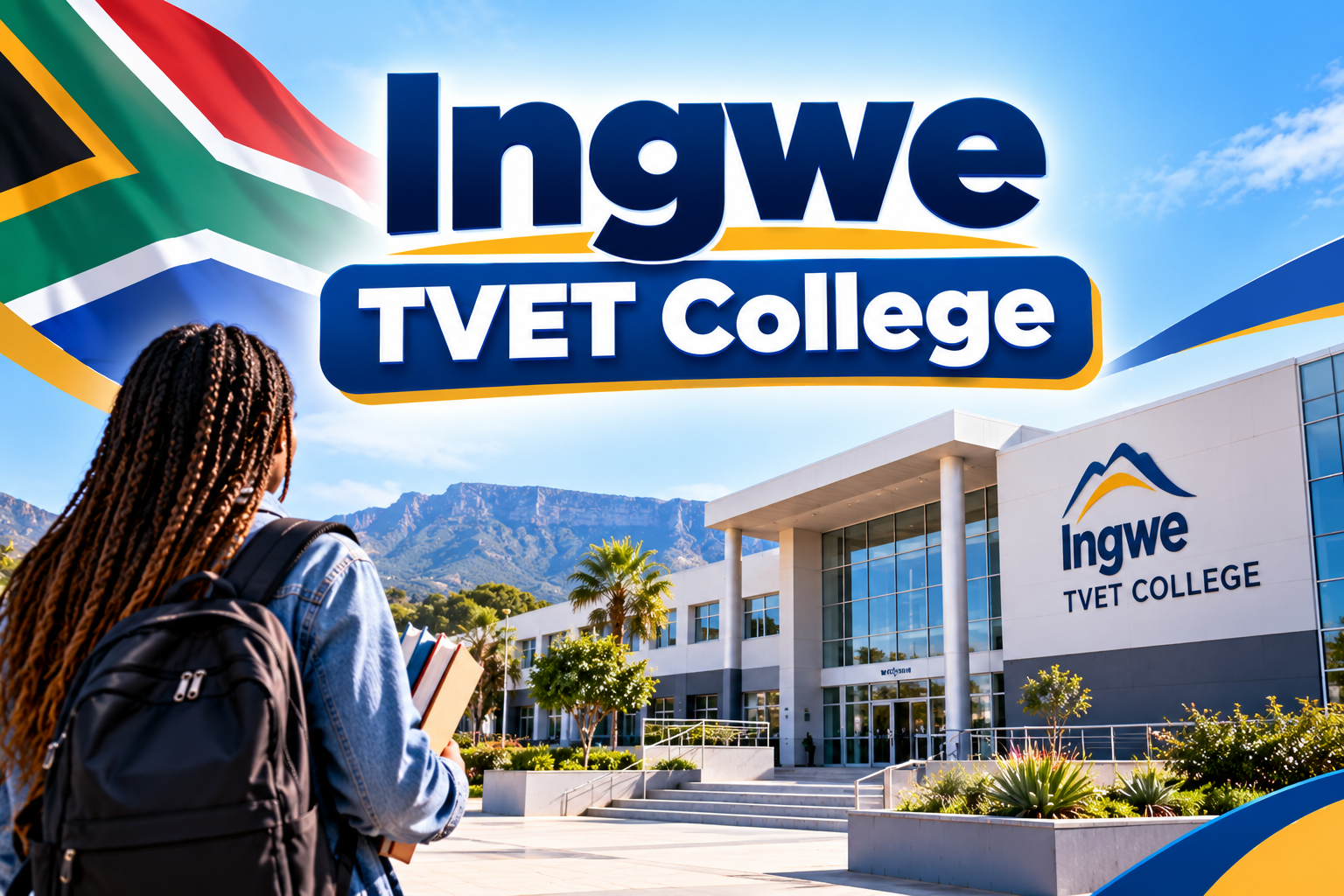
Ingwe TVET College 2026. Ingwe TVET College is a public technical and vocational education and training institution in the Eastern Cape, South Africa. It provides students with opportunities to learn practical skills, gain knowledge, and prepare for future careers. The college offers different study programmes for students who want to enter the job market, continue their education, or start their own businesses.
Many students search online for Ingwe TVET College courses, online applications, admission requirements, campuses, NSFAS funding, and contact details. Understanding these details can help applicants choose the right programme and prepare their applications correctly.

In this complete guide, you will learn about Ingwe TVET College, the courses it offers, its five main campuses, application steps, financial assistance, career opportunities, and important contact information.
What Is Ingwe TVET College?
Ingwe TVET College is a public Technical and Vocational Education and Training (TVET) college based in Mount Frere, also known as KwaBhaca, in the Eastern Cape province of South Africa.
The college supports skills development by offering education that can help students prepare for employment and self-employment. Unlike programmes that focus mainly on theory, many TVET courses include practical learning related to real workplace tasks.
Students can choose programmes based on their education level, interests, and career plans. Some courses focus on business and office work, while others prepare learners for technical jobs and skilled trades.
Why Do Students Choose Ingwe TVET College?
There are several reasons why students may consider this college for further education.
- Career-focused education: Many programmes teach knowledge and skills related to particular careers.
- Different study options: Students can explore business, engineering, IT, and vocational training.
- Practical learning: Technical programmes can help students develop hands-on skills.
- Multiple campuses: The college operates campuses in different locations across the Eastern Cape.
- Further education opportunities: Depending on the programme and entry requirements, students may continue studying after completing their qualifications.
- Employment preparation: Courses can help learners develop skills that employers may need.
- Self-employment opportunities: Some practical and business programmes can support students who want to establish their own businesses.
The best course depends on the student’s previous education, interests, and future plans.
Ingwe TVET College Campuses and Locations
Ingwe TVET College operates five main campuses. Each campus serves students from its surrounding community and provides access to vocational education.
Applicants should confirm which courses are available at their preferred campus before submitting an application, because not every programme is necessarily offered at every location.

| Campus name | Location | General information |
|---|---|---|
| Mount Frere Campus | Cancele Road, Mount Frere (KwaBhaca) | Main college area |
| Maluti Campus | Mli Road, Maluti | Serves students in the Maluti area |
| Mount Fletcher Campus | Hospital Area, Mount Fletcher | Provides access to vocational education |
| Ngqungqushe Campus | Magwa Road, Lusikisiki | Serves the Lusikisiki area |
| Siteto Campus | Mhlanga Village, Bizana | Serves the Bizana area |
1. Mount Frere Campus
Location: Cancele Road, Mount Frere (KwaBhaca)
Mount Frere is an important location for Ingwe TVET College and is associated with the college’s administrative centre in Badibanise Village. Students can contact the college to ask about available courses, admission information, registration dates, and other student services.
Applicants travelling to this campus should confirm the correct office location before visiting, especially if they need to submit documents or speak with the administration team.
2. Maluti Campus
Location: Mli Road, Maluti
Maluti Campus provides another option for students who want to study closer to home. Its location can be useful for learners from Maluti and nearby communities.
Students interested in business, technical, or other vocational programmes should check the current course list and confirm which programmes are available at this campus. Before applying, it is helpful to ask about entry requirements, registration dates, and any documents that may be needed.
3. Mount Fletcher Campus
Location: Hospital Area, Mount Fletcher
Mount Fletcher Campus serves students in and around Mount Fletcher. It provides an opportunity for learners to explore further education without necessarily travelling to a distant town.
Students should contact the college to confirm course availability and whether their preferred programme is offered at this campus for the intended intake.
4. Ngqungqushe Campus
Location: Magwa Road, Lusikisiki
Ngqungqushe Campus is located in Lusikisiki and serves students from the surrounding area. Learners who want to develop business, technical, or practical skills can contact the campus to learn about its current academic offerings.
It is important to check the latest prospectus because course availability, application periods, and admission conditions may change from one academic year to another.
5. Siteto Campus
Location: Mhlanga Village, Bizana
Siteto Campus is located in the Bizana area. It provides another study option for students living in nearby communities.
Before choosing this campus, applicants should ask about the programmes available, the required school results, registration arrangements, and possible financial assistance.
Tip: Always confirm your preferred course and campus directly with Ingwe TVET College before making travel arrangements or submitting documents.
Courses Offered at Ingwe TVET College
One of the most important reasons students search for Ingwe TVET College is to find information about its courses.
The college offers a range of programmes in business studies, engineering, computer studies, office administration, and artisan training. The exact courses available for a particular intake should be confirmed through the official college prospectus.
Below are the main programmes and fields included in the supplied course information.
Business and Management Courses
Business programmes are suitable for students interested in office work, administration, business operations, marketing, and financial activities. The listed programmes include:
- Business Management
- Financial Management
- Human Resource Management
- Marketing
- Management Assistant
- Office Administration
Business Management
Business Management introduces students to the basic activities involved in running an organisation. Depending on the qualification, subjects may cover business operations, management, communication, and planning.
Students may use this knowledge when applying for entry-level business positions or planning to manage their own small businesses.
Financial Management
Financial Management is suitable for learners interested in financial records, budgets, and the money-related activities of an organisation.
Students can develop knowledge that may be useful in accounting support, financial administration, and related office roles. Career opportunities depend on the qualification completed, relevant experience, and employer requirements.
Human Resource Management
Human Resource Management focuses on the people who work within an organisation. Depending on the course structure, students may learn about staff administration, workplace communication, recruitment support, and employee records.
This field may suit learners who enjoy working with people and supporting office operations.
Marketing
Marketing programmes introduce students to the ways businesses promote their products and services.
The subject may include customer needs, market research, advertising, communication, and sales support. These skills can be useful in retail, sales, customer service, and marketing-related roles.
Management Assistant and Office Administration
These programmes focus on administrative tasks that help offices operate effectively. Students may learn about document preparation, filing, communication, record keeping, and general office procedures.
These skills can be useful in private businesses, public offices, educational institutions, and other organisations.
Engineering Courses
Engineering programmes are important for students who prefer technical work, problem-solving, machinery, construction, or electrical systems. The supplied programme information lists the following areas:
- Electrical Infrastructure Construction
- Civil Engineering and Building Construction
- Engineering and Related Design
- Chemical Engineering
- Mechanical Engineering
Course availability and the exact qualification offered should be confirmed with the college before applying.
Electrical Infrastructure Construction
This field focuses on electrical systems and infrastructure. Depending on the programme, students may learn about electrical components, installation principles, safety procedures, and basic maintenance.
Electrical work requires proper training and attention to safety. Certain jobs also require additional qualifications, workplace experience, or professional authorisation.
Civil Engineering and Building Construction
Civil Engineering and Building Construction are suitable for students interested in buildings, construction sites, and infrastructure. Training may cover construction methods, materials, technical drawings, and site-related procedures, depending on the qualification.
These skills can support future work in the construction industry or further technical study.
Engineering and Related Design
Engineering and Related Design introduces students to technical design and engineering concepts. Depending on the programme, learners may develop skills in technical drawings, design processes, measurements, and engineering problem-solving.
This field may suit students who enjoy working with machines, designs, tools, and technical plans.
Chemical Engineering
Chemical Engineering relates to processes that use materials and chemical reactions to produce or improve products.
The field can involve manufacturing, process control, and industrial operations. Applicants should check the programme’s exact subjects and entry requirements before choosing it.
Mechanical Engineering
Mechanical Engineering focuses on machines, equipment, mechanical systems, and related technical processes.
Students interested in machinery, maintenance, production, and engineering technology may find this field worth exploring. The qualifications available and their practical requirements should be confirmed with the college.
Information Technology and Computer Science
Information Technology and Computer Science is another listed study area at Ingwe TVET College. Computer-related programmes may introduce students to computer systems, software, basic programming, troubleshooting, and IT support, depending on the course structure.
These skills can be useful in many workplaces because businesses, schools, and organisations depend on digital systems. Students interested in technology should check which IT programmes are open for the current intake and what school subjects or results are required.
NCV Programmes at Ingwe TVET College
National Certificate (Vocational), commonly known as NCV, is an important route within the TVET education system in South Africa. NCV programmes are generally offered at Levels 2, 3, and 4. A full NCV qualification normally takes three years when a student completes one level per year. These programmes combine academic learning with vocational subjects linked to a chosen field.
Who Should Consider NCV?
NCV may be suitable for students who:
- Have completed the required level of school education for the chosen programme.
- Want to learn skills related to a particular career.
- Prefer a mix of theory and practical learning.
- Want to explore employment or further education after completing their qualification.
Entry requirements vary by programme. Students should not assume that every course accepts the same school results. An NCV Level 4 qualification is often compared with Grade 12 in terms of its place in the education system, but it is not automatically identical to every matric certificate for all admission or employment purposes. Universities and employers may have their own requirements.
NATED or Report 191 Courses: N1 to N6
Ingwe TVET College also lists NATED, also known as Report 191, programmes.
These programmes include different study levels and may be offered in fields such as Business Studies and Engineering Studies. The structure and duration depend on the subject area and level.
Understanding N1 to N6
The N1 to N6 system allows students to progress through levels of vocational study.
- N1–N3: These levels are commonly associated with certain engineering study routes.
- N4–N6: These levels include further vocational study in business and engineering fields, depending on the programme.
- Practical experience: Some routes require relevant workplace experience to meet the requirements for a full qualification, such as a National N Diploma.
Students should confirm the exact requirements for their chosen programme because completion of classroom study alone may not meet every qualification requirement.
Artisan Trade Test Programmes
One of the notable features mentioned in the supplied information is the college’s partnership with Artisan Development Academy (Pty) Ltd to establish an accredited Trade Test Centre.
The information describes this centre as serving the Eastern Area of the Eastern Cape. Applicants should confirm its current accreditation status, trade-test arrangements, and available services directly with the college. Artisan training is useful for people who want to develop practical skills for technical and trade-related work.
Listed Artisan Trade Areas
The supplied information lists the following trades:
- Fitting and Turning
- Electrical
- Carpentry
- Plumbing
- Welding
- Brick Laying
- Motor Mechanic
- Panel Beating
- Spray Painting
What Is Artisan Training?
Artisan training helps learners develop practical skills in a specific trade. For example, plumbing involves water systems and pipe installation, while welding focuses on joining metal parts. Motor mechanics work with vehicle systems, and carpentry involves working with wood and related materials.
The training route, entry conditions, and trade-test eligibility depend on the specific trade and the learner’s existing qualifications or experience.
Why Consider a Trade Programme?
Artisan skills can be valuable because they are linked to practical services and technical work. Possible benefits include:
- Learning a specific trade.
- Developing hands-on technical ability.
- Preparing for relevant employment opportunities.
- Building a foundation for further trade training.
- Exploring self-employment after gaining the necessary skills and experience.
However, completing a course does not guarantee a job. Employment depends on skill level, experience, available vacancies, and the requirements of the relevant industry.
Ingwe TVET College Online Application
Students who want to study at Ingwe TVET College should check the official application process before submitting their details.
The supplied information indicates that applications may be made through the online college portal or in person at a campus, depending on the current admissions arrangements. You can start by visiting the official website:
Follow these general steps to prepare your application.
Step 1: Visit the official TVET website
Open the college website and look for the latest admissions, application, or registration information. Make sure you are using the official college website rather than an unrelated website that asks for personal information.
Step 2: Check the available courses
Read the current prospectus or programme list. Choose a course that matches your interests, previous education, and career goals. Confirm the campus where your chosen course is available.
Step 3: Review the admission requirements
Different programmes may have different entry requirements. Check the required school results, previous qualifications, subject requirements, and any other conditions listed for your selected course.
Step 4: Prepare your documents
Applicants may be asked to provide documents such as:
- A certified copy of their identity document or other accepted identification.
- Certified copies of school results or qualifications.
- Proof of residence, if required.
- Additional forms or documents requested by the college.
The exact document list can change, so follow the instructions for the current application period.
Step 5: Complete the application form
Enter your personal information accurately. Select the correct programme and campus, and review all details before submitting. If the college requires supporting documents, upload them in the requested format.
Step 6: Submit your application
Follow the final instructions on the official portal. If applications are being accepted in person, contact the relevant campus to confirm the procedure. Keep any confirmation message or application reference number you receive.
Step 7: Check your application status
After applying, monitor the official portal or communication channels provided by the college. Respond to requests for extra documents and follow the instructions if you receive an offer.
Important: Application dates, available programmes, and registration periods can change. The supplied information includes an old registration link, so applicants should use the latest official admissions information rather than relying on historical dates.
Ingwe TVET College Admission Requirements
Admission requirements depend on the selected programme and qualification level. There is no single requirement that applies to every course.
Before applying, students should check the latest prospectus or contact the admissions office.
Common Documents to Prepare
Although the exact list may vary, applicants can prepare the following documents in advance:
| Document | Why it may be needed |
|---|---|
| Identity document or accepted identification | To confirm the applicant’s identity |
| Latest school results | To assess academic eligibility |
| Previous qualification certificates | If required for the selected course |
| Proof of residence | If requested by the college |
| Application forms | To provide the required applicant information |
| Additional supporting documents | To meet programme-specific conditions |
Make sure all documents are clear, valid, and prepared according to the college’s instructions.
How to Improve Your Application Preparation
- Choose a course that matches your education level.
- Check all subject and qualification requirements.
- Confirm the application closing date.
- Prepare certified documents where requested.
- Use accurate contact details.
- Keep copies of the documents you submit.
- Check your messages and application status regularly.
Submitting an application does not automatically guarantee admission. The college must assess the application according to its admission rules and available spaces.
NSFAS Funding at Ingwe TVET College
Many students need financial support to continue their education. The National Student Financial Aid Scheme (NSFAS) provides financial assistance to eligible students at qualifying public institutions, including TVET colleges.
Students who plan to study at Ingwe TVET College should check the latest NSFAS rules and confirm whether their programme and circumstances qualify for funding.
What Is NSFAS?
NSFAS is a South African government financial aid scheme designed to help eligible students who need financial support for higher education.
Depending on the applicable rules, approved support for qualifying TVET students may cover eligible study costs and certain student-related expenses.
The type and amount of support depend on the current funding rules, the student’s circumstances, and the approved funding arrangement.
Who May Qualify for NSFAS?
Eligibility depends on the latest NSFAS requirements. Factors may include:
- Household income.
- Citizenship or accepted residency requirements.
- Registration at an eligible public institution.
- Enrolment in an approved qualification.
- Meeting the scheme’s academic and administrative rules.
Students should not assume that everyone who applies will receive funding.
How to Apply for NSFAS Funding
Follow these general steps:
- Visit the official NSFAS website.
- Read the current application information and eligibility requirements.
- Create an account or sign in using the official process.
- Complete the application with accurate details.
- Upload any requested supporting documents.
- Submit the application and save the confirmation.
- Monitor your funding status and respond to any requests.
Do not pay unofficial agents who promise guaranteed NSFAS approval. Use official channels and protect your personal information.
Career Opportunities After Studying at Ingwe TVET College
The career options available after studying at Ingwe TVET College depend on the qualification completed, the student’s skills, and the requirements of employers.
Vocational education can help students prepare for different types of work and may also provide a foundation for further study.
Business and Administration Careers
Students who complete relevant business programmes may explore roles such as:
- Administrative assistant.
- Office support worker.
- Junior marketing assistant.
- Business support staff member.
- Human resources administrative assistant.
- Financial administration assistant.
Some roles require further study, computer skills, experience, or additional professional training.
Engineering and Technical Careers
Depending on the programme and additional requirements, students may explore opportunities related to:
- Electrical work.
- Construction support.
- Mechanical maintenance.
- Engineering workshop assistance.
- Technical design support.
- Industrial operations.
Some technical jobs require practical experience, recognised trade qualifications, safety training, or professional registration.
Artisan and Self-Employment Opportunities
Students who gain suitable trade skills may consider employment with contractors, workshops, construction companies, or other businesses. With the required experience, tools, legal permissions, and business knowledge, some may also consider starting a small service business.
For example, a qualified and appropriately authorised tradesperson may explore plumbing, carpentry, welding, vehicle repair, or painting services.
Self-employment requires more than technical ability. Business planning, customer service, budgeting, pricing, and record keeping are also important.
Student Life and Learning at Ingwe TVET College
Studying at a TVET college involves more than attending classes. Students need to manage their time, complete assignments, develop practical skills, and prepare for future work. A successful student usually takes an active role in learning and asks for support when needed.
Tips for New Students
- Attend classes regularly: Attendance helps you understand lessons and stay up to date.
- Practise your skills: Technical and vocational subjects often require regular practice.
- Complete assignments on time: Organised study habits can make learning easier.
- Ask questions: Speak with lecturers when a topic is difficult.
- Use available support: Find out what academic or student services the college provides.
- Plan your expenses: Budget for transport, food, stationery, and other costs.
- Prepare for work: Improve communication, teamwork, computer skills, and problem-solving.
- Check official announcements: Stay informed about tests, registration, and college activities.
Students should also ask the college about accommodation, transport arrangements, student support, and other services instead of assuming that every campus offers the same facilities.
Ingwe TVET College Contact Details
If you need help with admissions, courses, registration, or campus information, contact the college directly.
The supplied information includes the following contact details. Because contact numbers and administrative arrangements may change, confirm them through the official website before relying on them.
Important Things to Check Before Applying
Before submitting your application to Ingwe TVET College, take time to confirm the following details.
- The latest application opening and closing dates.
- The course you want to study.
- The campus where that course is available.
- The academic requirements for admission.
- The documents needed for the application.
- The registration process and any applicable fees.
- The current NSFAS eligibility rules.
- The availability of accommodation or other student services, if needed.
- The correct telephone number and email address for admissions.
These checks can help you avoid delays and prepare a more complete application.
College Administration Centre
Address
Badibanise Village, Mount Frere (KwaBhaca), Eastern Cape, South Africa
Telephone numbers listed in the supplied information
+27 39 940 2142
+27 39 255 0346
Fax
+27 39 255 0347
Email listed in the supplied information
Official website: https://ingwecollege.edu.za/
Postal address: P.O. Box 92491, Mount Frere, 5090. Please verify all contact details before sending documents or travelling.
Campus Addresses at a Glance
| Campus | Address provided |
|---|---|
| Mount Frere | Cancele Road, Mount Frere |
| Maluti | Mli Road, Maluti |
| Mount Fletcher | Hospital Area, Mount Fletcher |
| Ngqungqushe | Magwa Road, Lusikisiki |
| Siteto | Mhlanga Village, Bizana |
GPS Coordinates Provided
The following coordinates were included in the supplied information. Confirm the location before travelling, as campus entrances and administrative offices may be in different places.
| Location | Latitude | Longitude |
|---|---|---|
| College Administration Centre | -30.889667 | 28.990290 |
| Mount Frere Campus | -30.892181 | 28.989228 |
| Maluti Campus | -30.258761 | 28.785641 |
| Mount Fletcher Campus | -30.687042 | 28.506361 |
| Ngqungqushe Campus | -31.375106 | 29.586814 |
| Siteto Campus | -30.852615 | 29.892087 |
FAQs About Ingwe TVET College
Here are answers to common questions students may have before applying.
Where Is Ingwe TVET College Located?
Ingwe TVET College is based in the Eastern Cape province of South Africa. Its administrative centre is associated with Badibanise Village in Mount Frere, also known as KwaBhaca. The college has five main campuses: Maluti, Mount Fletcher, Mount Frere, Ngqungqushe in Lusikisiki, and Siteto in Bizana.
Which Courses Are Offered at Ingwe TVET College?
The supplied course information lists Business Management, Financial Management, Human Resource Management, Marketing, Management Assistant, Office Administration, Electrical Infrastructure Construction, Civil Engineering and Building Construction, Engineering and Related Design, Information Technology and Computer Science, Chemical Engineering, and Mechanical Engineering.
How Can I Apply to Ingwe TVET College Online?
Visit the official college website and look for the latest application or registration instructions. Choose your course, check the entry requirements, prepare your documents, complete the application, and follow the submission instructions. If the online application period is closed or you cannot access the portal, contact the college to ask about the next intake.
Does Ingwe TVET College Accept NSFAS?
Eligible students at qualifying TVET colleges may receive NSFAS funding if they meet the applicable requirements. Students should check the official NSFAS website for current eligibility conditions, application dates, and funding rules. Funding is not guaranteed simply because a student has applied to the college.
How Many Campuses Does Ingwe TVET College Have?
The information supplied for this guide identifies five main campuses: Mount Frere, Maluti, Mount Fletcher, Ngqungqushe, and Siteto. Applicants should confirm the campus that offers their chosen course before applying.
Can I Study Engineering at Ingwe TVET College?
Engineering-related fields listed in the supplied information include Electrical Infrastructure Construction, Civil Engineering and Building Construction, Engineering and Related Design, Chemical Engineering, and Mechanical Engineering. Check the latest programme list to confirm the exact courses, entry requirements, and available study levels.
Does Ingwe TVET College Offer Artisan Training?
The supplied information lists trade areas such as Fitting and Turning, Electrical, Carpentry, Plumbing, Welding, Brick Laying, Motor Mechanic, Panel Beating, and Spray Painting. Applicants should contact the college to confirm current availability, entry conditions, and trade-test arrangements.
What Are the Contact Details for Ingwe TVET College?
The supplied information lists +27 39 940 2142 and +27 39 255 0346 as telephone numbers, with [email protected] as an email address. Because these details may change, confirm the correct contact information on the official college website.
Can I Continue Studying After Completing a TVET Qualification?
Further study may be possible, depending on the qualification you complete and the entry requirements of the institution or programme you want to enter. Students should check admission rules with the relevant university or college before making plans.
Does Completing a Course Guarantee Employment?
No. A qualification can help you develop useful knowledge and skills, but employment depends on factors such as your results, practical experience, job vacancies, and employer requirements. Students can improve their prospects by developing workplace skills, completing practical training, and preparing a strong CV.
Conclusion
Ingwe TVET College provides vocational education and training opportunities for students in the Eastern Cape, South Africa. With five main campuses and study areas that include business, engineering, information technology, office administration, and artisan trades, the college offers different routes for learners with different career goals.