
TVET Boost Urged By Government To Reduce Unemployment
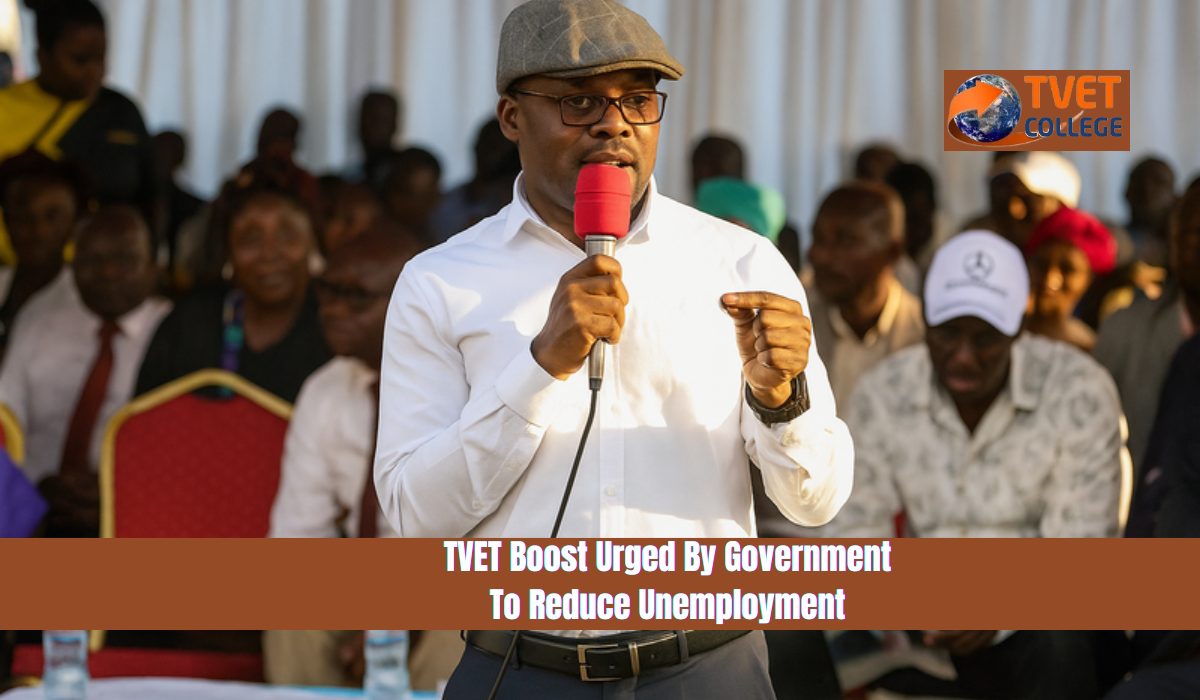
TVET Boost Urged By Government To Reduce Unemployment. In today fast-evolving global economy, the need for skilled labour is at an all time high. The call for an urgent TVET boost (Technical and Vocational Education and Training) has become central to reducing youth unemployment and fostering sustainable development in many developing countries, especially in Africa. Visionaries and policy experts alike are increasingly recognising TVET not just as a parallel to academic education but as a strategic driver of economic growth.
One of the strongest voices advocating for this transformation is Samuel Aboagye, the National Secretary of the Local Mine Contractors Association. His message is clear: for nations to unlock their economic potential, they must invest in Technical and Vocational Education and Training.
TVET: A Critical Pillar of Industrial Development

In many parts of the world, especially in developing countries like Ghana, TVET is often misunderstood as a second-tier educational pathway. However, Samuel Aboagye has been vocal in redefining this narrative. According to him, TVET is not an alternative to education—it is the backbone of industrial success.
“Without trained technicians, artisans, and engineers, there can be no mining, no construction, no manufacturing,” says Aboagye.
Countries such as Germany, South Korea, and Singapore have shown that prioritising technical and vocational education can result in highly skilled labour forces that power manufacturing, innovation, and infrastructure development. It is time for developing nations to emulate such models.
Why a TVET Boost is Needed Now More Than Ever

As traditional industries evolve with technology and innovation, the skills gap continues to widen. This gap is more apparent among the youth population in Africa, where unemployment rates remain alarmingly high. The key to reversing this trend lies in rethinking the role of vocational education.
Samuel Aboagye highlights that Ghana’s mining industry is heavily reliant on technically trained personnel, many of whom are graduates of local TVET institutions. Yet, insufficient investment in this sector threatens to stall progress.
He cautions that:
- Undervaluing vocational training undermines national development.
- Failure to invest in TVET infrastructure and trainer capacity is a missed opportunity.
- Youth unemployment cannot be solved by academic degrees alone—practical skills are critical.
Strategic Investments for a Thriving TVET Sector

To effectively implement a TVET boost, governments and stakeholders must undertake strategic actions that include:
| Area of Investment | Required Actions |
|---|---|
| Infrastructure | Build and modernise vocational training centres across all regions |
| Equipment & Tools | Provide modern machinery and industry-standard tools for practical learning |
| Trainer Development | Upskill instructors with the latest teaching methods and technologies |
| Curriculum Reform | Align training content with industry demands and emerging technologies |
| Policy & Funding | Enact legislation and allocate adequate funding for sustainable growth |
Samuel Aboagye believes that policy driven empowerment will encourage more young people to become job creators rather than job seekers. A skills-based economy not only reduces unemployment but also fosters entrepreneurship and innovation.
Mainstreaming TVET Across All Sectors
Beyond the mining sector, there is a pressing need to mainstream TVET across all areas of national development. Whether it is agriculture, energy, construction, or technology, each of these industries requires technically competent professionals.


Aboagye is calling on educational stakeholders, development partners, and government institutions to ensure that TVET becomes a central focus in their development agendas. This involves revisiting existing educational policies, forming public-private partnerships, and creating industry linkages that enhance the employability of TVET graduates.
He adds that developing nations cannot build resilient economies without first cultivating skilled hands a point often overlooked in policy discourse.
TVET: A Tool for Economic Transformation
Embracing TVET as a tool for economic transformation requires changing public perception. Historically, vocational training has been perceived as inferior to academic qualifications. However, in reality, TVET plays a much more critical role in nation-building and sustainable employment.
- Job Readiness: TVET graduates enter the workforce with hands-on experience.
- Entrepreneurship: Skills-based training empowers individuals to start their own businesses.
- Innovation: Technical training fuels innovation in sectors like agriculture, energy, and ICT.
- Reduced Poverty: Employable youth contribute to economic productivity and family welfare.
- Inclusive Growth: TVET opens opportunities for individuals regardless of their academic background.
Collaborative TVET Investment
The success of a TVET boost lies in collaboration between government, industry, and civil society. Samuel Aboagye emphasises that technical and vocational training should not be isolated from mainstream education and industry planning.
He urges policymakers to:
- Integrate TVET in national education systems.
- Offer financial incentives and scholarships for TVET learners.
- Promote TVET through media and community campaigns.
- Partner with local industries to provide internships and apprenticeships.
Only with a holistic, inclusive, and forward-thinking approach can developing nations harness the full potential of their youthful populations and achieve sustainable economic progress.
Conclusion
The message from Samuel Aboagye is a timely wake-up call. In an age where unemployment and underemployment plague youth across the developing world, the answer lies in building practical skills and competencies through TVET. Governments must take bold steps to create a future where technical education is valued, funded, and mainstreamed into every aspect of national development.